
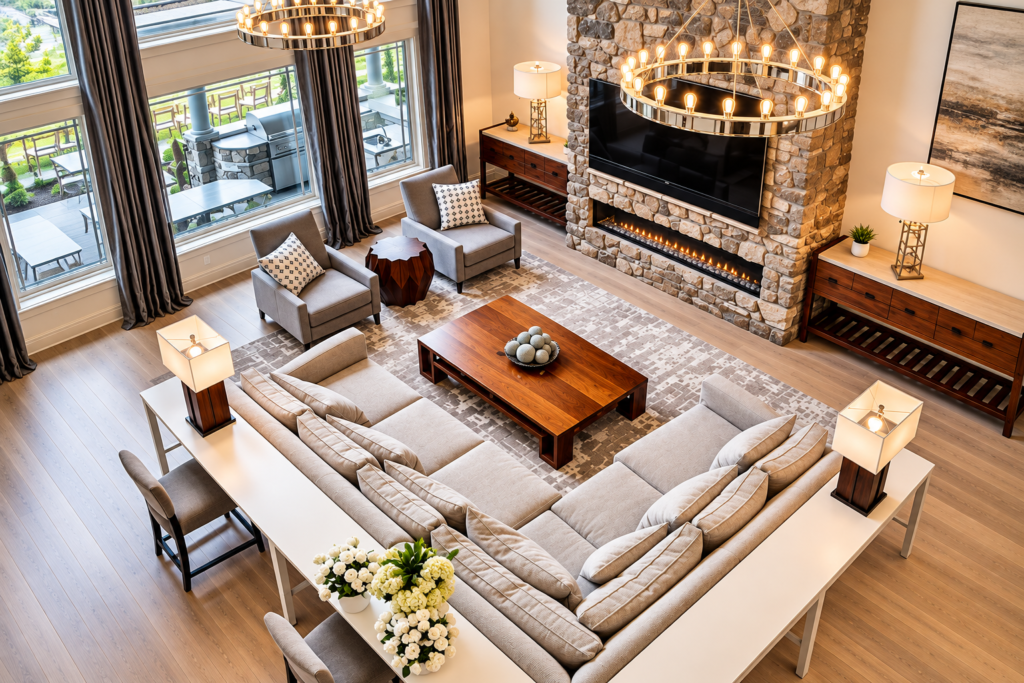
Lighting has the ability to completely change how a room feels.
It can make architecture more dramatic, materials richer and intimate spaces warmer. It influences color, atmosphere and even how we experience a room at different times of day.
Yet lighting is often approached surprisingly late in a renovation.
Homeowners may spend months considering cabinetry, stone, furniture and finishes, while the electrical and lighting plan is treated primarily as a construction requirement.
By the time decorative fixtures are selected, junction boxes and recessed lights may already be installed.
Thoughtful lighting works differently.
It is planned as part of the interior from the beginning.
Think in Layers
A well-lit room rarely relies on one source of light.
Instead, we think in layers.
Ambient lighting provides general illumination.
Task lighting supports specific activities such as cooking, reading, grooming or working.
Accent lighting highlights architecture, art or objects.
Decorative lighting contributes beauty and personality even when it isn’t switched on.
When these layers work together, lighting becomes flexible.
A kitchen can be bright and functional in the morning, then warmer and more atmospheric when guests arrive for dinner.
Recessed Lighting Isn’t the Entire Lighting Plan
Recessed lights are useful, but more is not necessarily better.
A ceiling filled with evenly spaced downlights can illuminate a room without creating atmosphere.
Instead, recessed lighting should respond to the architecture and furniture plan.
What are we illuminating?
A work surface? Art? A fireplace? A circulation path?
Once lighting is designed around purpose rather than simply filling a ceiling grid, the room feels much more considered.
Decorative Lighting Is Part of the Composition
Chandeliers, pendants and sconces are some of the most sculptural elements we place in a home.
Their scale matters.
A fixture that is too small can disappear over a substantial dining table or within a double-height room. One that is incorrectly positioned can interfere with sightlines or feel disconnected from the furniture below it.
This is why we prefer to select important decorative lighting while developing the overall design rather than waiting until the end of construction.
The fixture, furniture and architecture should relate to one another.
Use Light to Reveal Materials
Beautiful materials respond beautifully to light.
The veining of stone, texture of plaster, warmth of wood, sheen of metal and depth of textiles can change dramatically depending on how they are illuminated.
Indirect light can emphasize architectural surfaces softly.
Directional light can bring artwork forward.
Lighting inside cabinetry or shelving can create depth and intimacy.
The objective isn’t always to make a room brighter.
Sometimes it is to create shadow, contrast and dimension.
Consider the Color of the Light
The temperature of light affects how every other color in a room appears.
Very cool light can make warm materials feel flat or clinical. Warmer light generally creates a more inviting residential atmosphere, particularly in living and entertaining spaces.
Consistency matters as well.
When adjacent fixtures produce noticeably different color temperatures, the interior can feel disjointed even when the furnishings and finishes are beautifully coordinated.
This is a technical detail, but one with enormous visual impact.
Dimmers Are Essential
One of the simplest ways to make lighting more versatile is also one of the most important: dimming.
The amount of light needed while preparing dinner is different from the amount desired once everyone sits down to eat.
A bathroom requires functional illumination in the morning but may benefit from softer lighting at night.
A living room used for reading needs to transition easily into an intimate entertaining space.
Lighting should adapt to life throughout the day.
Lighting Should Respond to Furniture
This is one reason we encourage clients to involve the interior designer before electrical plans are finalized.
A floor outlet may depend on where a sofa will sit.
A picture light depends upon artwork.
A dining chandelier depends upon the final table location—not simply the center of the room.
Bedside sconces depend on the dimensions of the bed and nightstands.
Kitchen pendants depend upon the island.
When furniture is considered after electrical work, these relationships can easily be missed.
Don’t Forget Natural Light
A lighting plan begins with understanding daylight.
The direction a room faces, window sizes, surrounding landscape and time of day all affect how the interior will feel.
Rooms with abundant natural light may need different colors and artificial lighting strategies from darker spaces.
Window treatments are part of this equation too.
They allow us to filter glare, provide privacy and control how daylight enters the room while also contributing softness and architecture.
Plan Lighting Early
Lighting affects electrical work, ceilings, cabinetry, millwork and sometimes the architecture itself.
That makes it difficult—and often expensive—to reconsider once construction is well underway.
When lighting is planned early, we can coordinate it with the furniture plan, materials and architectural details so that it feels integrated rather than added afterward.
At Avantte Interior Designs, we think about lighting as both function and atmosphere.
Because when lighting is truly successful, you don’t simply notice the fixtures.
You notice how beautiful the entire room feels.